
Glenn Diesen - Greater Eurasia Podcast
Every episode of Glenn Diesen - Greater Eurasia Podcast, briefed the morning after, with up to nine more shows in one daily email.
Free for 30 days. No card needed. $4.99 a month after.
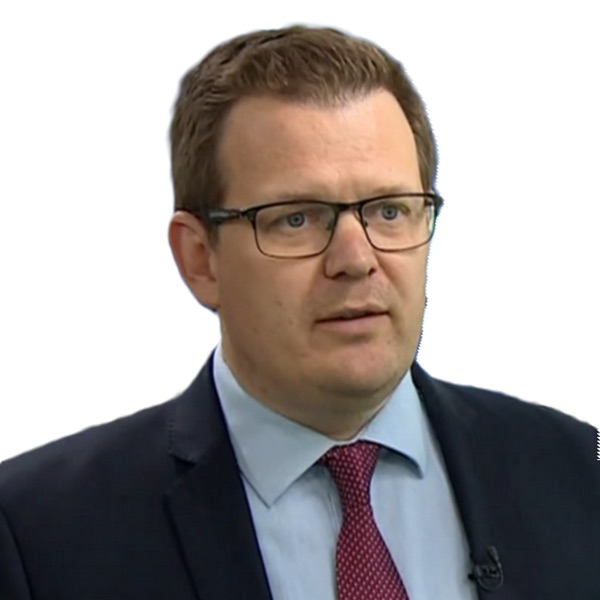
Karin Kneissl: Energy Wars & the Coming Collapse of Europe
Across the conversation, Kneissl and Diesen argue that Europe is losing power not primarily because of external attack but through self-inflicted choices: abandoning affordable Russian energy, refusing to engage with emerging multipolar institutions like BRICS or the SCO, and imposing regulatory and legal burdens that drive away trading partners and hollow out its own industry and rule of law. The recurring claim is that Europe clings to a unipolar, morally superior self-image—demonizing Russia, ignoring multipolar realities, and even violating its own legal principles (on refugees, citizenship, free passage)—while the real centers of economic dynamism shift east, leaving Europe to decline into what Kneissl repeatedly calls a 'museum.'
What was discussed
Geoeconomics and the 'energy war' thesis1:40
- Diesenopinion
US decline is making economic/geoeconomic conflicts (Iran, Russia, Venezuela) take on a more coercive, energy-centered format
- Karin Kneisslassertion
Energy has been the central basis of power for at least 120 years, and even earlier via water and grazing resources
Europe's redefinition of energy security3:31
- Diesenopinion
Europe redefined 'energy security' from cheap/reliable supply to cutting off Russia, despite higher cost and less reliability
- Karin Kneisslassertion
Affirms this shift and situates it within Europe's historical lack of resource wealth relative to Africa and South America
Europe as a 'poor continent' facing food/energy quagmire4:13
Kneissl argues Europe, unlike resource-rich Africa or South America, has historically lacked arable soil and minerals, having exported surplus population via the Crusades and colonialism. She describes a current 'explosive mix' of under-filled gas storage, low Rhine/Danube water levels, aging and costly-to-decommission French nuclear reactors, sovereign wealth funds (e.g., from the Gulf) buying arable land in Africa, and European dairy farmers slaughtering animals for lack of hay.
Erosion of free passage and maritime law13:12
- Diesenopinion
Blockades and shipping attacks (Venezuela, Hormuz, Baltic, Black Sea) reflect a broader breakdown of transportation corridors akin to the energy wars
- Karin Kneisslassertion
The historic principle of free passage is being dismantled via fees and seizures, reversing the basis on which global trade was built
Multipolar realignments: Turkey-Saudi-Pakistan and BRICS' evolution17:43
Kneissl cites a newly brokered security alliance between Turkey, Saudi Arabia and Pakistan—despite past Turkey-Saudi tension over the Khashoggi killing—as an example of regional multipolarity driven by security concerns. She traces BRICS from an investor-coined commodity term in the early 2000s (credited to figures like Jim Rogers) into a loose but active grouping without a charter or secretariat, expressing skepticism that BRICS efforts toward alternative reserve currencies will succeed as some claim.
EU's failure to engage with the multipolar world22:55
- Karin Kneisslassertion
EU institutions had literally no position paper on BRICS/SCO despite the topic being widely taught, reflecting institutional insularity
- Diesenopinion
NATO/EU deliberately avoid engagement with CSTO, SCO or BRICS to preserve the unipolar framing, undermining Europe's own interests
Europe becoming a 'museum' amid deindustrialization28:43
- Diesenspeculation
Russia and others are pivoting economically eastward regardless of the Ukraine war, raising the question of Europe's remaining role
- Karin Kneisslopinion
Europe is deindustrializing into a 'museum' due to lost affordable energy contracts and self-imposed regulatory burdens, not primarily Russian sanctions
Decline of EU legitimacy, administration, and 'loss of law'39:28
- Diesenopinion
Europe's political class is increasingly unpopular and illegitimate, lacking a clear economic model or moral compass
- Karin Kneisslopinion
The EU's core failure is administrative and legal decay—ideological bureaucracy replacing effective governance—culminating in a broader 'loss of law'
Kneissl's own citizenship being stripped40:22
- Karin Kneisslassertion
Austria is moving to strip her sole citizenship, rendering her stateless, over her academic affiliation with a Russian university
- Diesenassertion
Recalls that Putin's attendance at her 2018 wedding as foreign minister is still invoked as a demonizing narrative
EU asylum rule denying Ukrainian draft-age men43:24
- Karin Kneisslassertion
New EU rule denying asylum to Ukrainian draft-age men violates the 1951 Refugee Convention and reflects Zelensky's pressure for manpower
- Diesenopinion
EU policy reveals a contradiction: standing with Zelensky rather than actual Ukrainians, many of whom oppose fighting or want negotiations
Every episode of Glenn Diesen - Greater Eurasia Podcast, briefed the morning after, with up to nine more shows in one daily email.
Free for 30 days. No card needed. $4.99 a month after.
More from Glenn Diesen - Greater Eurasia Podcast
Automated summaries of what was said on each show — not claims by DailyDossier and not independently verified.