
Glenn Diesen - Greater Eurasia Podcast
Every episode of Glenn Diesen - Greater Eurasia Podcast, briefed the morning after, with up to nine more shows in one daily email.
Free for 30 days. No card needed. $4.99 a month after.
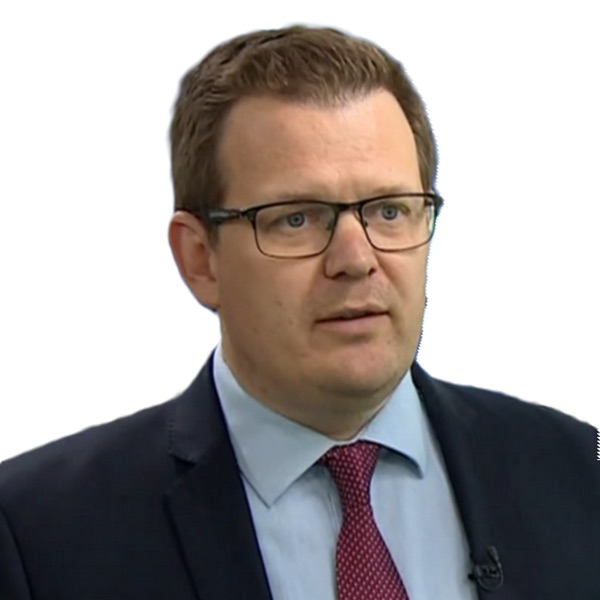
Matthew Blackburn: The Plan to Pressure Russia Has a Huge Flaw
What was discussed
Origins of the deep strikes strategy
The strategy of striking deep into Russia originated from Kyiv rather than European capitals or Washington, emerging after the failed 2023 Ukrainian offensive. Zelensky's 'victory plan,' involving minerals deals, security guarantees, and deep strike capability, was presented to Biden before the 2024 election but not approved; Trump was later made aware of it. Zelensky's personal familiarity with Russia informs his belief that pressuring Putin personally could change Russian policy.
Assumptions behind pressuring Putin through economic pain
The Western strategy assumes that increasing economic and civilian costs on Russia will generate public pressure on Putin to end the war. Polling data suggests a divide between Russians who view the war instrumentally (as a cost-benefit calculation) and a smaller ideologically committed minority who support escalation. The instrumental majority may become disgruntled as costs rise, but they remain passive and depoliticized rather than politically active.
Lack of political mechanisms to translate discontent into pressure on Putin
Even if the Russian public becomes more discontented with war costs, there are few political actors capable of channeling that sentiment into pressure on the Kremlin. The marginal liberal party Yabloko, led by Grigory Yavlinsky, has called for ending the war but has had members arrested and lacks a platform ahead of Duma elections. Technocrats in government, such as the prime minister and Moscow's mayor, remain silent rather than advocating publicly for peace.
Historical precedent for bombing campaigns failing to break will to fight
Historical examples such as Germany, Japan, North Vietnam, and North Korea show that heavy bombing campaigns targeting civilian populations often fail to break a country's will to continue fighting, sometimes strengthening resolve instead. North Korea eventually compromised only due to pressure from China and the USSR, while North Vietnam achieved its objectives without compromising. This raises doubts about whether increased pressure on Russia will force a similar climbdown.
Comparative attrition and lack of objective damage assessment
Public discourse on the war often lacks objective comparison of casualties and damage on both the Russian and Ukrainian sides, since raising uncomfortable facts about Ukrainian losses is frequently dismissed as pro-Russian. This asymmetry in acceptable discourse creates a self-reinforcing narrative that avoids addressing which side is closer to reaching its breaking point in a war of attrition.
Ambiguity of Western peace demands versus Russian existential threat perception
European proposals for ending the war center on a ceasefire without clearly resolving the underlying political conflict, while implicitly still envisioning eventual NATO membership for Ukraine, peacekeepers, and full territorial restoration including Crimea. This falls short of addressing Russia's perception of NATO's involvement in Ukraine as an existential threat, making a durable peace unlikely under current European terms.
Common misconceptions about Russian threat perception
Western analysts often frame Russian motivations as either fear of democracy spreading to Russia, a diversionary war to distract from domestic issues, or a desire to dominate and annex neighboring states. These framings are challenged by evidence: Putin's approval ratings were high before 2022 removing need for a diversionary war, autocracies like Mexico or Singapore coexist with democratic neighbors without war, and Russia's actions in Georgia and Ukraine (such as the Minsk II framework) suggest leverage-seeking rather than outright annexation or domination.
Russian sovereignty concept and Middle East as a reference point
Russian security thinking is rooted in a Westphalian and historically informed concept of sovereignty shaped by its geography, borders, and history of invasions. Putin's worldview is influenced by Western intervention patterns in the Middle East, where sovereign states such as Libya, Iraq, Syria, and Iran were destabilized or invaded while pro-Western states were supported as client states, reinforcing his desire to prevent similar dynamics in the post-Soviet space.
Sphere of interest versus sphere of influence, and comparisons to Georgia and Mexico
Dmitry Medvedev's distinction between a Russian 'sphere of interest' (accounting for Russian security concerns) versus a 'sphere of influence' (exclusive domination) was largely dismissed in the West as effectively demanding limited sovereignty for neighbors. A comparison is drawn to the United States' informal sphere of interest over Mexico, where great power involvement in a neighboring state is constrained by the security concerns of the larger power, illustrating that such arrangements are not unique or illegitimate to Russia's stance.
Divergent conceptions of sovereignty and democracy between Russia and the West
Vladislav Surkov's concept of 'sovereign democracy' reflects a traditional, undivided Hobbesian and Westphalian notion of sovereignty combined with a majoritarian view of democracy separated from liberalism. This contrasts with post-1989 Western conceptions that favor pooling sovereignty into supranational institutions and defining democracy through a checklist promoted by liberal democratization NGOs, creating a fundamental conceptual mismatch that impedes mutual understanding.
Russia's 2022 invasion as limited war in the Clausewitzian tradition
The scale and initial conduct of the February 2022 invasion, including limited bombing compared to other conflicts, indicate it was intended as a limited war aimed at achieving diplomatic aims such as Ukrainian neutrality, rather than a full-scale invasion. This is consistent with Zelensky's own account that Putin sought negotiations on neutrality in exchange for troop withdrawal, forming the basis of the Istanbul talks. The characterization of the invasion as a 'full scale invasion' or 'blitzkrieg' is inconsistent with military historical definitions of these terms.
Communication failures and illegitimacy of framing limited war aims
Russia's inability to clearly articulate a limited, Clausewitzian objective, instead using vague terms like 'demilitarization' and 'denazification,' stems from the illegitimacy of Westphalian-style limited war in contemporary international discourse. This led to reliance on cultural, historical, and identity-based justifications, including the widely disputed claim of Ukrainian fascism, contributing to misunderstanding of Russian war aims in the West.
Erosion of proxy war norms since 2022
Norms regarding proxy warfare have shifted significantly since the war began, with the initial reluctance of Western countries to supply weapons directly (to avoid becoming a 'participant') giving way to widespread military support without similar constraints. This shift illustrates changing rules of engagement and greater direct involvement of Western states in the conflict compared to earlier Cold War-era proxy conflicts, which were kept within contained boundaries to avoid drawing in nuclear powers directly.
Risks of escalation from deep strikes and the need for combined diplomacy and reassurance
Deep strikes into Russian territory could be a legitimate negotiating tool for Ukraine if paired with genuine diplomacy and back-channel reassurance to Russia, similar to the 'fight and talk' approach that ended the Korean War. However, current Western strategy lacks both structured diplomatic channels and reassurance mechanisms, relying primarily on escalating pressure, which risks provoking further Russian escalation rather than compelling negotiation.
Every episode of Glenn Diesen - Greater Eurasia Podcast, briefed the morning after, with up to nine more shows in one daily email.
Free for 30 days. No card needed. $4.99 a month after.
More from Glenn Diesen - Greater Eurasia Podcast
Automated summaries of what was said on each show — not claims by DailyDossier and not independently verified.