
Glenn Diesen - Greater Eurasia Podcast
Every episode of Glenn Diesen - Greater Eurasia Podcast, briefed the morning after, with up to nine more shows in one daily email.
Free for 30 days. No card needed. $4.99 a month after.
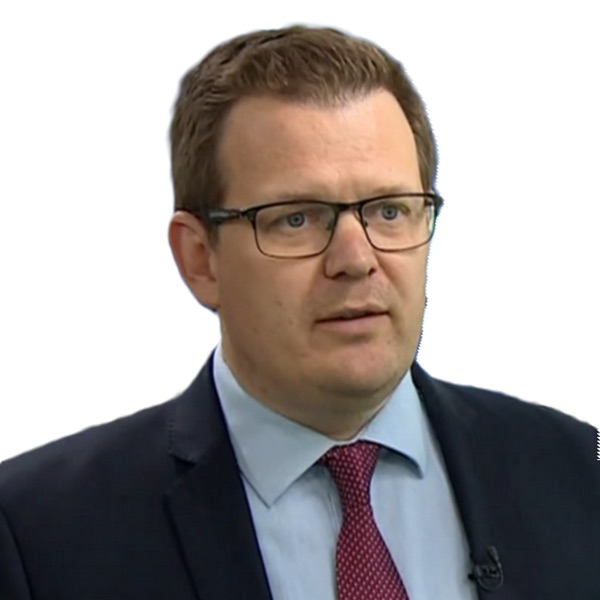
George Beebe: The Peace Plan with Russia the West Ignores
What was discussed
Enlarging the peace process beyond Ukraine
George Beebe argues that the Ukraine war cannot be resolved as a purely bilateral conflict between Russia and Ukraine, but must be understood as part of a broader geopolitical conflict between Russia and the West over European security that has persisted since the end of the Cold War. He suggests that following Eisenhower's principle of enlarging unsolvable problems, the US should engage Russia directly on European security architecture rather than focusing only on territorial issues in Ukraine. Russia has repeatedly proposed draft treaties on this topic over three decades, which the West has largely ignored.
Critique of escalation as a path to peace
Beebe critiques the Western strategy of escalating pressure on Russia (such as long-range strikes) in hopes of forcing peace, noting this reflects an "escalate to deescalate" logic. He argues this approach backfires because Russia perceives the conflict as an existential geopolitical struggle with the West using Ukraine as a proxy, so escalation reinforces Russian resolve rather than weakening it. He points to Russia's counter-escalation, including intensified strikes on Ukraine and the closure of the port of Odessa, as evidence of this dynamic.
The principle of indivisible security
Beebe explains the principle of indivisible security, established in the Helsinki Final Act and reaffirmed in the Paris Charter for a New Europe, which holds that one state's security gains should not come at the expense of another's security. He notes Russia has repeatedly invoked this principle in proposed treaties, including one from Medvedev's presidency and draft treaties presented in late 2021 before the invasion, but the West has resisted formally addressing it. He argues that reconciling competing principles like territorial integrity and self-determination is the essence of diplomacy that has been missing from Western approaches.
Rethinking NATO's role in European security
Beebe argues that European security cannot remain NATO-centric because Russia is excluded from it and views a pan-European NATO as a direct threat. He states the US would need to find a new mechanism, potentially resembling a small UN Security Council equivalent for Europe, to give Russia a genuine voice in security decisions rather than the previous NATO-Russia Council model, which allowed consultation but not influence over NATO decisions. He suggests this would require years of sustained diplomatic engagement.
Historical precedents and challenges of returning to diplomacy
Discussion of how the Helsinki Accords (1975), the Charter of Paris (1990), and the OSCE (1994) established principles of indivisible security and sovereign equality that were sidelined during the post-Cold War unipolar era. Beebe argues the US does not need to "go back in time" but return to enduring diplomatic principles, acknowledging that the liberal hegemonic approach pursued after the Cold War has failed and proven counterproductive given Russia's demonstrated willingness to go to war over these issues, as shown in Georgia in 2008 and Ukraine in 2014 and 2022.
US strategic interests in a multipolar world
Beebe argues that US policy has counterproductively pushed Russia, China, and Iran into closer alignment, a outcome Zbigniew Brzezinski warned against in "The Grand Chessboard" as the worst possible strategic scenario for the United States. He contends that addressing Russia's security concerns in Europe is strategically necessary to prevent this alignment, given that the US now faces a multipolar world with China as a peer rival rather than the unipolar moment of the early 1990s.
Applying the same framework to Iran
Beebe extends the concept of enlarging the problem to US-Iran relations, noting Iran has legitimate existential security concerns following US and Israeli attacks on its leadership. He proposes that restoring normal diplomatic relations and easing sanctions would benefit the Iranian people, deprive Iran's theocratic government of the US as a unifying enemy, and could open pathways to resolving issues like the Strait of Hormuz and nuclear proliferation concerns.
Implications for US alliances in the Middle East
Discussion of whether normalizing relations with Iran would undermine US influence over Gulf allies and petrodollar-related interests. Beebe argues that US military bases in the region have already become liabilities, making Gulf states targets rather than providing security, and that the existing alliance structure is already eroding regardless of policy toward Iran.
Every episode of Glenn Diesen - Greater Eurasia Podcast, briefed the morning after, with up to nine more shows in one daily email.
Free for 30 days. No card needed. $4.99 a month after.
More from Glenn Diesen - Greater Eurasia Podcast
Automated summaries of what was said on each show — not claims by DailyDossier and not independently verified.